Tijuana is about twenty miles from downtown San Diego — a thirty to forty minute drive to the border. The distance is trivial. The border is not, and it is the border rather than the mileage that decides how long the trip takes and which option makes sense.
This guide covers the crossings, the transport to each, and the thing most first-timers get wrong: the direction of travel matters enormously. Going south is usually quick. Coming north can take hours.

First, understand the three crossings
San Ysidro. The main one, and the busiest land border crossing in the Western Hemisphere. It connects directly into central Tijuana and is where most pedestrian and vehicle traffic goes. Open 24 hours.
Otay Mesa. East of San Ysidro, closer to Tijuana’s industrial areas and its airport. Often quicker for vehicles, and the crossing commercial traffic uses. Also open 24 hours, though some lanes have restricted hours.
Cross Border Xpress (CBX). A pedestrian bridge that goes from a terminal in Otay Mesa directly into Tijuana International Airport. Only usable if you are flying in or out of Tijuana airport, because you must present a boarding pass. If that is you, this is almost always the right crossing, and we cover it fully in our CBX guide.
Southbound is easy. Northbound is the problem.
This is the asymmetry nobody warns visitors about.
Going into Mexico, there is usually no queue to speak of. Mexican authorities conduct spot checks rather than inspecting everybody, and pedestrians often walk through in minutes. A vehicle crossing southbound at a quiet hour can be through in ten minutes.
Coming back into the United States, every single person is inspected by US Customs and Border Protection. Waits of one to three hours are ordinary at San Ysidro, and on a Sunday evening or a holiday they can be longer. Pedestrian lines and vehicle lines are separate and move at different rates.
The practical consequences shape every sensible plan:
- Build the return into your timetable, not the outbound leg
- Never schedule a flight for the same evening you return unless you have a very large margin
- Check live wait times before you head back — CBP publishes them, and they change hour to hour
- SENTRI and Ready Lanes move faster if you are enrolled or have the right documents
The options for getting to the border
| Option | Time to border | Typical cost | Suits |
|---|---|---|---|
| Private car or van | 30–40 min | Fixed fare | Groups, luggage, fixed timing, airport connections |
| Trolley (Blue Line) | 45–60 min from downtown | A few dollars | Solo and budget travel, no luggage |
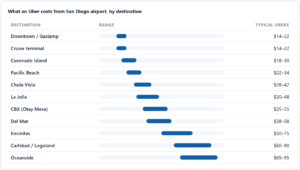
| Uber / Lyft | 30–40 min | $45–70 from the airport | One or two people |
| Shared shuttle | Varies | Per person | Occasional operators, check schedules |
| Drive yourself | 30–40 min | Parking on the US side | Day trips where you park and walk over |
Our flat fares from SAN to the San Ysidro crossing start at $69 in a sedan and $89 in the 14-seat van; Otay Mesa and CBX start at $79 and $105. Indicative rates, confirmed before booking.
The trolley: genuinely good for a day trip
The San Diego Trolley’s Blue Line runs from downtown all the way to San Ysidro, terminating a short walk from the pedestrian crossing. It costs a few dollars and takes forty-five to sixty minutes from the Santa Fe Depot.
For a day trip with no luggage, this is a sensible and cheap way to do it: trolley to San Ysidro, walk across, spend the day, walk back, trolley home. Thousands of people do exactly that every day.
It does not serve the airport directly. From SAN you would take the 992 into downtown and transfer to the trolley, which adds time. And with suitcases the walk through the pedestrian crossing becomes considerably less appealing.
An important point about vehicles crossing
Most San Diego transport companies, including us, do not drive across the border. There are real reasons: US vehicle insurance does not extend into Mexico, Mexican liability insurance has to be bought separately, and a vehicle sitting in a three-hour northbound queue is a vehicle not doing anything else all afternoon.
What that means in practice is the model almost everyone uses:
We drive you to the crossing on the US side. You walk across. You arrange transport on the Mexican side separately.
That sounds like a limitation and mostly is not, because walking across at San Ysidro is the fast way to do it anyway — the pedestrian line usually moves faster than the vehicle line, in both directions. Taxis and rideshare are readily available immediately on the Tijuana side.
If you specifically need a vehicle that crosses, you need an operator licensed and insured for Mexico, which is a different kind of company. Ask us and we will tell you honestly rather than take the booking.
What you need to cross
Going south: a valid passport. Mexico does not always inspect, but you must have it, because you cannot come back without it.
Staying beyond the border zone or longer than a short visit: you may need an FMM tourist permit. Rules change, so check the current requirements with Mexican authorities before you travel rather than relying on a blog post.
Coming north: a US passport, passport card, or an approved document such as a trusted traveller card. Everybody is inspected.
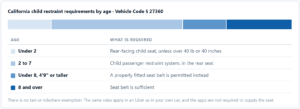
Children: requirements differ for minors and for adults travelling with a child who is not theirs. Check before you go — this is the one that most often causes a problem at the booth.
Day trips, dentistry and the other reasons people cross
A large share of this traffic is not tourism.
Medical and dental. Tijuana has a well-established medical tourism industry, and a lot of San Diego residents cross for dental work, pharmacy purchases and procedures. These trips often involve a fixed appointment time, which makes the northbound return and the next appointment the thing to plan around.
Shopping and dining. Avenida Revolución, the Mercado Hidalgo, and increasingly Tijuana’s restaurant scene, which has become a genuine destination.
Onward travel. Tijuana’s bus terminal connects to the rest of Baja, including Rosarito, Ensenada and the Valle de Guadalupe wine region.
Visiting family. The everyday traffic, in both directions, that makes this the busiest crossing in the hemisphere.
The airport. Covered by CBX, above.
What it costs by group size
One-way from SAN to the San Ysidro crossing.
| Travellers | Rideshare | Our flat fare | Per person, booked |
|---|---|---|---|
| 1–2, light bags | One UberX, $45–70 | $69 sedan | $35 each at two |
| 3–4 with cases | One UberXL, $65–100 | $89 van | $22 each at four |
| 5–6 | Two vehicles, $110–170 | $89 van | $15 each at six |
| 7–10 | Three vehicles, $160–250 | $89 van | $9–13 each |
| 11–14 | Four vehicles, $220–340 | $89 van | $6–8 each |
When booking matters
Airport connections. If you are landing at SAN and crossing the same day, or crossing back to catch a flight, the timing is tight and the border is unpredictable. A tracked booking that moves with your flight removes one of the two variables.
Medical appointments. Fixed times, often early, frequently involving someone who should not be standing in a queue longer than necessary.
Groups. Border queues are easier to manage as one party than as three carloads that arrive separately.
Early-morning crossings. Many people cross early specifically to beat the queue, which means a 4 or 5am pickup — the thinnest part of the rideshare day.
Mobility needs. The pedestrian crossing at San Ysidro involves distance, ramps and turnstile-style gates. Book an accessible vehicle to the crossing and plan the walk realistically. Our ADA van has a hydraulic lift and four-point securement.
Onward into Baja: Rosarito, Ensenada and the wine country
A good share of people crossing at San Ysidro are not stopping in Tijuana. They are heading further down the peninsula.
Rosarito is about twenty miles south of Tijuana along the coast road — beaches, hotels, and a short enough hop that it works as a day trip.
Ensenada is roughly seventy miles south, on the coast. The cruise port, the fish market, and the gateway to the wine region.
Valle de Guadalupe is Baja’s wine country, inland from Ensenada, and over the past decade it has become a genuine culinary destination — the kind of place people now plan whole trips around rather than visiting as an afternoon from the coast.
How people get there. From the Tijuana side, the options are the bus terminal — which has frequent services down the peninsula — or a hired car and driver arranged in Mexico. The toll road along the coast, the Carretera Escénica, is the route most visitors take and it is a genuinely scenic drive.
What this means for the San Diego leg. Our part is getting you to the crossing on the US side, and for a Valle de Guadalupe trip that is usually San Ysidro. What you do from the Tijuana side is arranged separately, and it is worth arranging it before you cross rather than at the border — the pressure to accept the first offer you are given is higher than it needs to be.
One practical note on the return. Coming back from Ensenada or the Valle, you are looking at a two to three hour drive to the border and then the northbound queue on top of it. A same-day round trip from San Diego to the wine country and back is possible and it is a long day. Two nights is the version people enjoy.
Where we drop you, and what happens next
Being specific about this, because the handover is the part people are unsure about.
At San Ysidro, the drop-off is at the US side of the pedestrian crossing. From there you walk through, clear Mexican immigration, and come out into Tijuana a short distance from the taxi rank and the bus terminal connections. Taxis are plentiful and immediately available.
At Otay Mesa, the same arrangement at a quieter crossing — often faster for vehicles and closer to Tijuana’s airport and industrial districts.
At CBX, you walk the bridge directly into Tijuana airport, which is the simplest of the three if you are flying. Our CBX guide covers it.
Agree the meeting point for the return before you go. The area around the crossings is busy, and “I’ll call you when I’m through” works considerably better when there is already an agreed spot a vehicle can legally wait.
Coming back: the part to take seriously
Repeating this because it is the thing that goes wrong.
The northbound queue at San Ysidro commonly runs one to three hours. Do not book a return flight for the same evening you come back unless you have a very large margin. Do not plan a dinner reservation in San Diego for ninety minutes after you intend to cross.
Check CBP’s published wait times before you head for the border. If San Ysidro is backed up, Otay Mesa is sometimes dramatically quicker, and the thirty minutes it takes to get there can save two hours in a queue.
And if you are being collected on the US side, agree a specific meeting point and expect the time to move. A driver who tracks your crossing rather than waiting on a meter is worth the difference on this particular trip.
Frequently asked questions
How far is Tijuana from San Diego? About twenty miles from downtown to the San Ysidro crossing — a thirty to forty minute drive. The border wait, not the distance, is what determines the journey time.
How long is the wait at the San Ysidro border? Going south, usually minutes. Coming north into the United States, one to three hours is ordinary and longer on Sunday evenings and holidays. Check CBP’s live wait times before you travel.
Can I take the trolley to Tijuana? The Blue Line trolley runs to San Ysidro, a short walk from the pedestrian crossing. You walk across the border yourself. From the airport you would take the 992 into downtown and transfer.
Do San Diego car services drive into Mexico? Most do not, including us — US insurance does not extend across the border and a vehicle can lose hours in the northbound queue. The standard arrangement is a drop at the crossing, you walk across, and you arrange transport on the Mexican side.
Should I cross at San Ysidro or Otay Mesa? San Ysidro for central Tijuana and pedestrian crossings. Otay Mesa is often faster for vehicles and closer to the airport. Check live wait times — when San Ysidro is backed up, the drive to Otay Mesa can save hours.
What documents do I need to cross back into the US? A US passport, passport card or approved trusted traveller document. Everybody is inspected northbound. Requirements for minors differ, so check before you travel.
To the crossing, on time, at a fixed fare. San Ysidro, Otay Mesa and CBX runs with flight tracking on airport connections. Book your border transfer or call dispatch 24/7 on +1 (619) 863-3842.